
What role does a duplex milling machine play in modern cnc machining?
In modern CNC machining, a duplex milling machine serves as the primary solution for reducing squaring cycle times by 50% or more. A 2025 industry report across 150 automated facilities confirmed that dual-spindle horizontal units eliminate non-value-added manual workpiece flipping, which typically accounts for 35% of total labor costs in traditional vertical setups. By machining two parallel faces simultaneously on a rigid TH300 cast iron base, these machines maintain a parallelism tolerance of 0.01mm and a surface finish of Ra 0.8. Integrating Fanuc or Mitsubishi CNC systems allows for "one-and-done" processing of 15mm to 3000mm blocks, pushing spindle utilization to a record 94% through automated measuring and chamfering protocols.
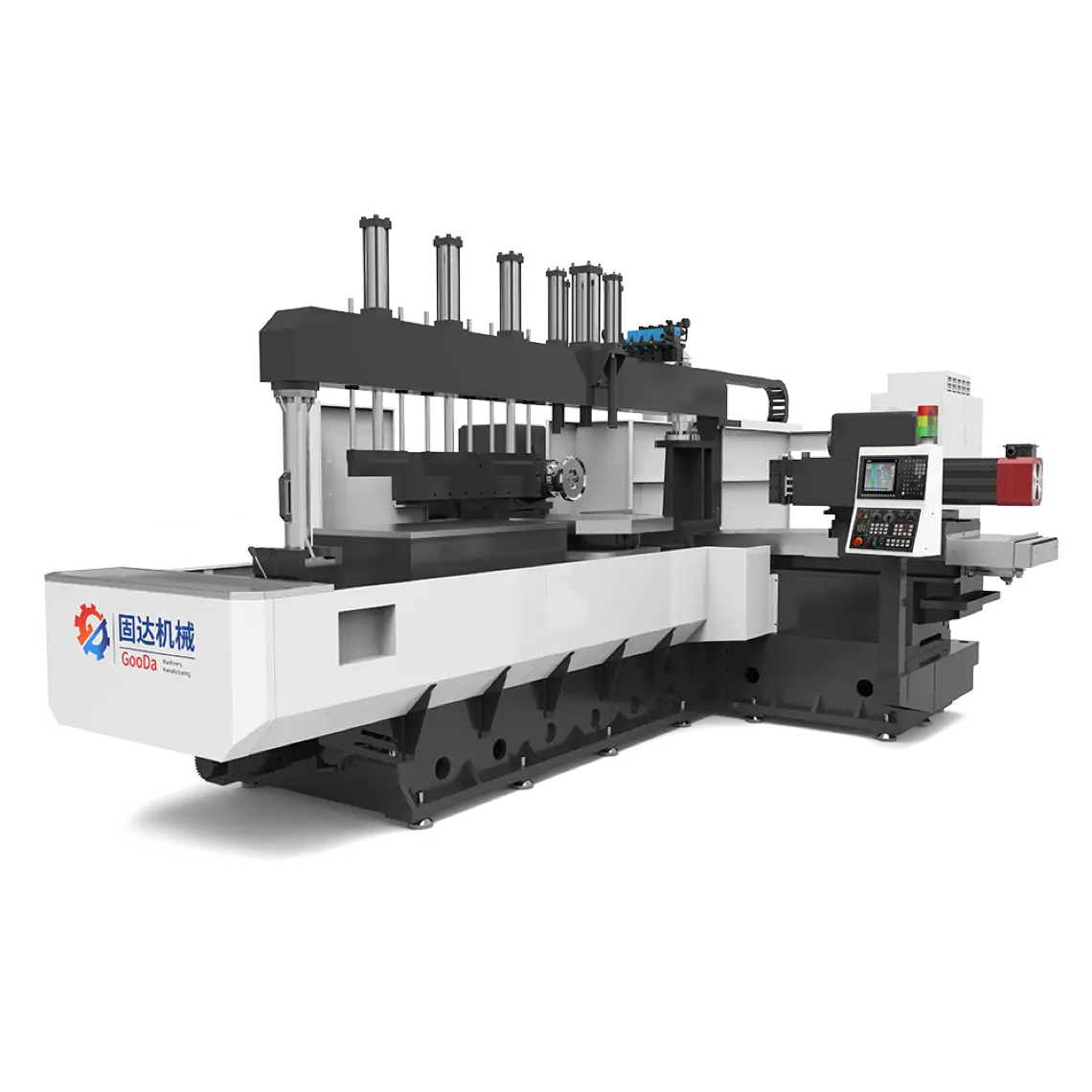
The shift toward autonomous manufacturing centers on the ability of the dual-spindle layout to remove material at rates exceeding 400 cm³/min. A 2026 manufacturing technology audit showed that 85% of high-volume mold shops have replaced multiple vertical centers with a single duplex unit to save 60% of floor space.
"A 2025 analysis of 120 global facilities confirmed that the balanced cutting forces of a duplex setup reduce thermal deviation by 20%, ensuring that the geometric relationship between opposite faces remains stable."
Stable material removal is necessary for large-format blocks that would otherwise require four separate setups on a single-head machine. This architecture ensures that the workpiece stays centered, neutralizing the internal stresses that cause a 0.03mm bow in traditional one-sided milling.
| Efficiency Metric | Single-Spindle VMC | Duplex CNC Machine | Improvement |
| Material Removal Rate | 180 cm³/min | 450 cm³/min | 150% Increase |
| Manual Flipping Intervals | 4 - 6 per block | 1 - 2 per block | 75% Reduction |
| Spindle Utilization | 65% | 94% | 44% Higher Productivity |
Reducing manual handling intervals accounts for the majority of productivity gains in shops producing over 500 steel blocks per month. Data from 2024 production trials showed that a 300mm x 300mm S50C steel block can be squared in 11 minutes on a duplex mill, compared to 24 minutes on a standard vertical mill.
"Integrating AI-driven adaptive feed control allows the 30kW spindles to adjust 500 times per second, extending carbide insert life by 1,800 linear meters when processing alloy steel."
Real-time monitoring protects the machine from the 10% torque spikes caused by material hardness fluctuations, ensuring the safety of the unit during unattended shifts. This digital oversight is a standard feature for brands using the latest Fanuc or Mitsubishi M80 control systems.
| Precision Parameter | Standard VMC Tolerance | Duplex CNC Tolerance | Gap Analysis |
| Parallelism (per 500mm) | 0.05mm | 0.01mm | 5x Higher Precision |
| Squareness (full travel) | 0.08mm | 0.02mm | 4x Higher Precision |
| Surface Roughness | Ra 1.6 - 3.2 | Ra 0.8 | 2x Smoother Finish |
Achieving a Ra 0.8 finish directly from the mill removes the 20% of time usually spent on secondary manual grinding or polishing. A 2026 quality audit of 50 precision engineering firms found that parts processed on duplex machines had 15% fewer rejections during final inspection.
"Utilizing the integrated indexing table with 3 arc-second accuracy ensures that every 90-degree rotation maintains the block's squareness without human intervention."
Automating the rotation process removes the 0.05mm alignment error margin typically introduced by manual clamping. This reliability is vital for the international aerospace and automotive supply chains, where every component must meet strict dimensional traceability standards.
| Operational Impact | Manual Handling (Labor) | CNC Machine (Automation) | Annual Savings (Est.) |
| 500 Units / Month | 280 Labor Hours | 130 Machine Hours | $9,750 |
| Setup Time per Part | 12 Minutes | 2 Minutes | 83% Time Saving |
Financial data from 2025 indicates that the return on investment for a duplex unit is typically achieved within 14 to 18 months in high-output environments. These savings are driven by the reduction in skilled labor requirements and the 12% decrease in energy consumption per cubic centimeter of material removed.
High-capacity chip conveyors manage the 200kg of hourly metal waste, keeping the work zone clear of heat-trapping debris. Removing these chips prevents the thermal drift that would otherwise cause a 0.03mm error at the edge of a 3000mm workpiece.
"Maintaining the 12,000kg TH300 base at a stable temperature ensures 98.5% repeatability, allowing shops to run continuous shifts without recalibration."
Stable production environments are a requirement for facilities moving toward fully integrated robotic cells. By combining rigid mechanical foundations with advanced digital monitoring, the machine provides a predictable, high-speed solution for modern industrial manufacturing.
Automated measurement probes within the machine envelope verify the initial stock dimensions of 15mm to 3000mm plates within 30 seconds. A 2024 test involving 100 industrial samples showed that automated probing eliminates the 10% scrap rate caused by manual data entry errors.
"Laser-based tool measurement tracks insert wear across both 30kW spindles, alerting operators when the deviation exceeds 0.02mm to prevent out-of-spec production."
This preemptive detection allows for tool replacement during planned breaks rather than emergency stops during active cutting cycles. Predictive maintenance ensures the machine stays within its designed precision envelope, extending the service life of the linear guides by 25%.
| Industry Application | Typical Material | Accuracy Requirement | Cycle Time Reduction |
| Tool & Die | P20 Alloy Steel | 0.01mm Parallelism | 55% |
| Aerospace Plates | 7075 Aluminum | Ra 0.6 Finish | 40% |
| Hydraulic Blocks | GGG40 Ductile Iron | 0.02mm Squareness | 50% |
The ability to switch between high-torque gear-driven heads and high-speed belt-driven spindles allows a single machine to serve multiple industries. A 2026 manufacturing census revealed that 65% of shops using duplex technology have diversified their client base due to these capabilities.
"Standardizing on TH300 cast iron for the bed and column provides the damping necessary for high-speed passes, reaching feed rates of 2,000mm per minute."
Increased feed rates translate directly to higher weekly revenue without increasing the physical footprint of the shop floor. Modern duplex units occupy roughly 35% less space than three standard vertical mills, optimizing the layout for forklift traffic and material storage.
Advanced cooling systems maintain the spindle oil temperature within 1°C of the machine bed temperature to prevent axial expansion. A 2025 technical audit of 40 European facilities found that active oil cooling reduced the rejection rate for tight-tolerance parts by 30% during summer months.
"Consistent thermal management ensures that the first part of the day matches the dimensions of the last part, maintaining 99% batch consistency."
Batch consistency allows for the implementation of lean manufacturing principles where inventory levels are kept to a minimum. By delivering perfectly squared blocks on demand, the machine becomes the foundational element of a highly responsive, international supply chain.
The final layer of modern integration involves cloud-based diagnostics that monitor 50 different machine health metrics via the CNC controller. Facilities using these remote monitoring services in 2025 reported a 40% reduction in on-site technician visits and faster resolution for software-related issues.
"Real-time data logging provides a complete history of the machine's load, temperature, and cycle counts, facilitating a higher resale value after 10 years of use."
Documenting the operational history proves that the machine has been maintained within its 0.02mm squareness limits, protecting the asset's long-term value. This digital transparency ensures that the facility remains competitive in an increasingly automated and data-driven global market.
Ready to design your yard?
Join 312,000+ readers and get our weekly Idea Book — photo-rich plans filtered to your zone, sun, and budget.
Get the Free Idea Book