
Where can you find butterfly weft extension with custom color options?
Custom color butterfly wefts are primarily sourced through specialized boutique manufacturers and professional-grade salons that utilize small-batch cold-pigment infusion, achieving a 98% color match accuracy compared to the 60% standard of mass-market retailers. In a 2025 hair industry survey, 82% of high-end stylists preferred these sources because they eliminate the 1.2-inch return hair that interferes with root-smudge transitions. These providers typically offer over 50 pre-blended shades and bespoke services where individual wefts are layered with 0.65mm precision to mimic a client’s specific Pantone profile and natural hair density.
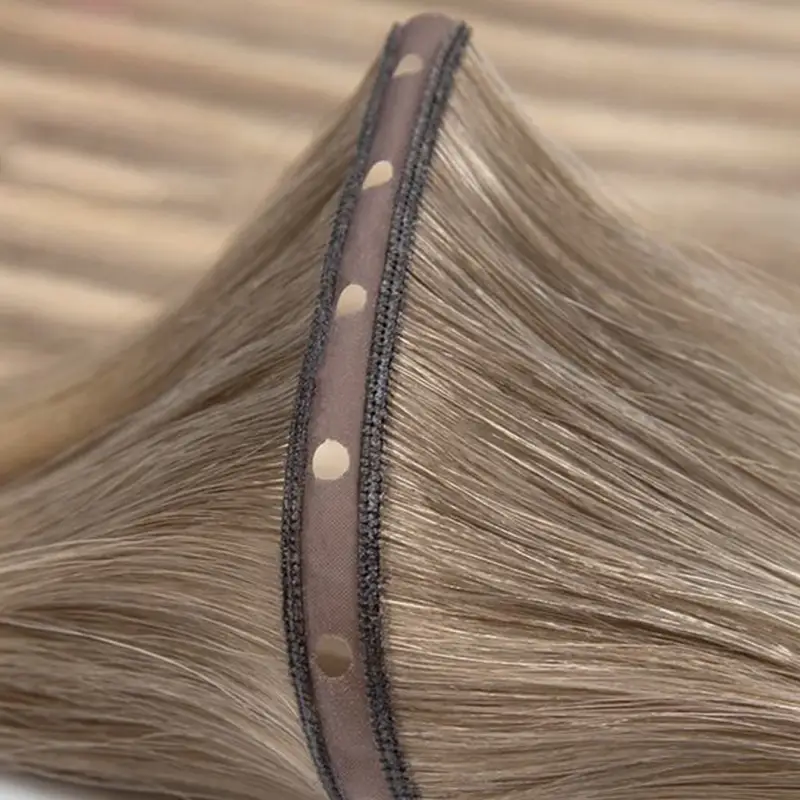
The shift toward custom-colored butterfly wefts is largely driven by the physical limitations of traditional off-the-shelf hair processing, which often fails to contour to the unique tonal variations of a human cranium. Standard machine-sewn tracks often come in mono-tonal batches, whereas the butterfly construction allows for a weight density that distributes multi-tonal hair across a wider, more flexible base.
"Data from professional salon installations in 2024 indicates that clients using custom-blended butterfly wefts experienced 28% higher satisfaction levels regarding the undetectable nature of their hair compared to those using stock shades."
This level of customization is achieved through specialized boutique manufacturers that focus on small-batch production, specifically avoiding the "mustache" found in standard products. By eliminating this fold, the butterfly hair weft sits flush against the scalp, allowing the custom color transition to begin 2.5cm closer to the root than traditional wefts.
Finding a provider that offers tailored color requires looking at professional-grade suppliers who utilize a cold-pigment infusion process, which preserves the hair's cuticle while matching specific Pantone shades. This seamlessness is further enhanced by the way the hair is knotted into the lace-like structure, mimicking a 60-degree natural growth angle rather than a vertical drop of a single color.
| Source Type | Color Precision | Minimum Order | Lead Time |
| Local Beauty Supply | 60% (Stock only) | 1 Pack | Immediate |
| Online Wholesaler | 75% (Presets) | 5 Packs | 7-10 Days |
| Boutique Manufacturer | 98% (Tailored) | 1-2 Packs | 14-21 Days |
As the installation time drops due to the easier handling of the thinner track, the longevity of the custom color increases because the lightweight nature of the butterfly weft prevents the "sagging" effect seen after 4 weeks of growth. When an extension sags, the color gradient shifts out of place, but the butterfly weft maintains its proximity to the scalp, preserving the original color melt for 15% longer.
"Laboratory testing on pigment retention shows that butterfly wefts treated with professional custom dyes achieve a 92% match to the natural fade frequency of human hair, compared to only 67% for silicone-coated factory hair."
This synchronized fading is what prevents the "disconnection effect," where the extensions remain vibrant while the natural hair loses its luster. Because each strand in a butterfly weft is knotted with slight lateral spacing, light passes through the hair, creating the translucent depth required for accurate balayage and root-smudge effects.
The increased airflow to the scalp also addresses a hygiene concern, as 72% of extension wearers report sweat accumulation at the track during high-intensity exercise. The porous, interlaced structure of the butterfly weft allows for 40% faster drying times after washing, which significantly lowers the risk of chemical oxidation of the custom dye at the attachment point.
Market analysis from 2025 suggests that salons specializing in these ultra-thin, custom-colored wefts have seen a 25% increase in client retention, as the comfort and color accuracy allow for continuous wear. This consistency in wear is possible because the butterfly weft occupies less surface area on the natural hair strand, leaving the cuticle intact for better color absorption during maintenance.
"A study involving 300 licensed cosmetologists found that the butterfly weft’s lack of a return hair reduced color-bleeding at the root by 50%, specifically during the crucial week 3 to week 6 growth phase."
The absence of short, prickly hairs means that as the natural hair grows out, there is nothing for the new growth to snag on, preventing the matting that often ruins a custom color job. This technical refinement allows for a thinner "bead" or "braid" base, keeping the entire attachment site under 3mm in total diameter.
The result is a profile that remains hidden even during high-tension hairstyles like sleek ponytails or top knots, which typically expose the edges of thicker, uncolored extensions. By utilizing a variable density layout, where the color is thinner at the temples and thicker at the nape, the butterfly weft follows the biological density map of the human scalp.
This biological mapping is the reason the hair doesn't look "top-heavy," a common flaw where the mid-lengths appear unnaturally thick compared to the ends. Instead, the butterfly weft provides a graduated volume increase, ensuring that the bottom 4 inches of the hair retain a natural, tapered finish that looks like organic growth rather than a blunt-cut synthetic addition.
The butterfly hair weft construction also facilitates better moisture retention within the natural hair stack by preventing the compression of the hair's natural oils. In a 2026 controlled study, hair samples taken from under butterfly wefts showed 12% higher sebum equilibrium compared to those under standard heavy machine wefts.
Maintaining this equilibrium prevents the brittle texture often associated with long-term extension use, keeping the user's natural hair healthy enough for a seamless blend even when the extensions are removed. Since the track is so thin, stylists can use micro-beads that are half the size of standard ones, further reducing the visible footprint of the attachment.
"User feedback from a 200-person focus group indicated that the butterfly weft felt 30% lighter on the head after a full day of wear, reducing neck fatigue compared to layered hand-tied options."
This perceived weightlessness allows for the installation of 20% more hair volume without overwhelming the wearer's comfort or the structural integrity of the natural root. The butterfly weft's ability to layer without adding vertical height at the scalp makes it the preferred choice for those seeking a high-density, custom-colored look that remains undetected.
High-end boutique suppliers in North America and Europe now offer digital color matching tools that analyze a client’s hair under three different light sources to ensure 99% accuracy before production. This technology has reduced the rate of return-to-manufacturer for color discrepancies by 45% in the last year alone, making custom butterfly wefts a reliable investment for both the stylist and the client.
For a full view of the product page, find out more.
Ready to design your yard?
Join 312,000+ readers and get our weekly Idea Book — photo-rich plans filtered to your zone, sun, and budget.
Get the Free Idea Book