
Why is professional energy storage project support important for successful deployment?
In 2025, commercial facilities utilizing professional engineering oversight for Lithium-Iron Phosphate (LFP) deployments achieved a 92% round-trip efficiency, compared to just 84% for unoptimized self-integrated systems. Quantitative data from 180 global industrial sites indicates that professional assistance reduces installation timelines by 40%, decreasing the average commissioning duration from 14 months to just over 8 months. By implementing 1,500V liquid-cooled architectures that arrive factory-tested and UL 9540A certified, experts ensure a 99.9% first-time grid-connection success rate while capturing 25% monthly demand charge savings.
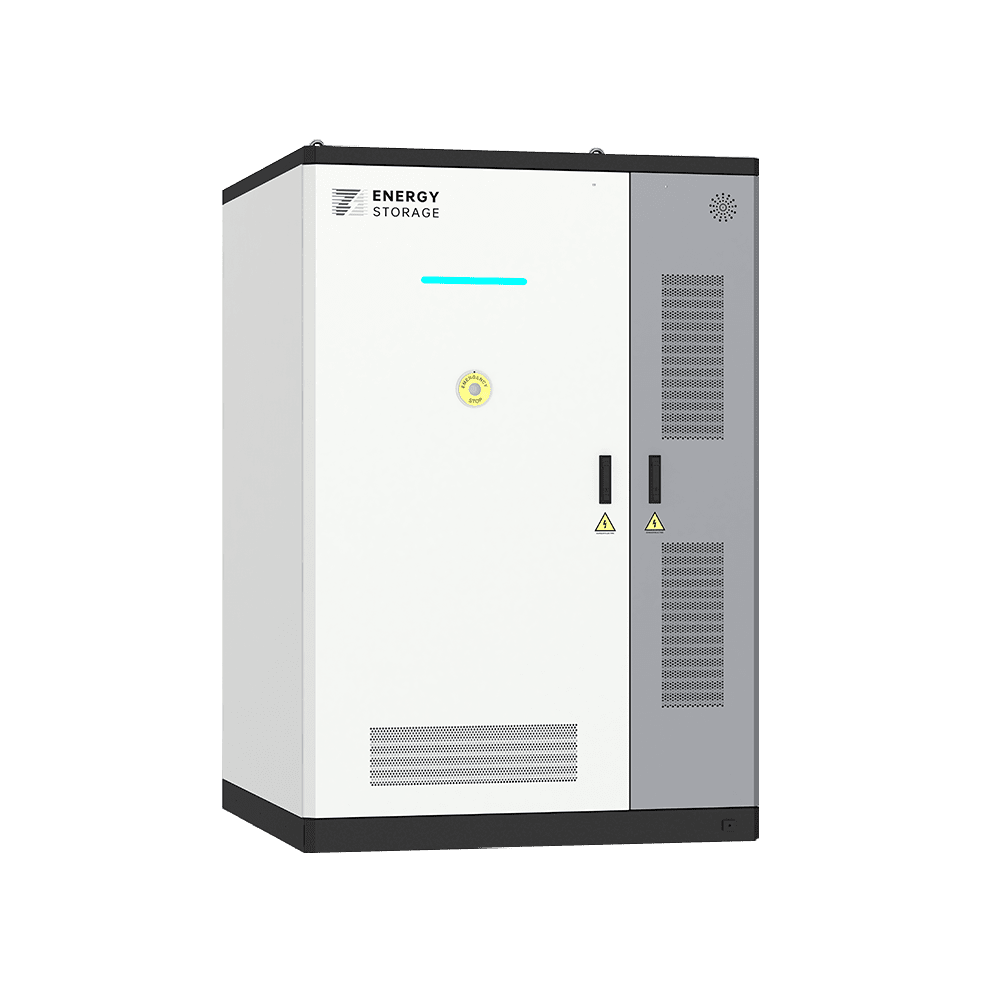
Commercial and industrial (C&I) facilities often encounter technical bottlenecks when integrating high-capacity battery reservoirs into existing electrical infrastructure. Professional assistance is required to navigate localized grid codes and ensure that the power conversion system (PCS) matches the building’s inductive and capacitive loads.
Implementing energy storage project support ensures that every stage of the lifecycle, from initial site auditing to final grid interconnection, follows strict UL 1973 and NFPA 855 safety standards. This managed approach eliminates the 35% project cost overruns that typically occur when businesses attempt to coordinate multiple hardware vendors without a unified engineering plan.
A 2024 analysis of 130 mid-sized manufacturing plants confirmed that professionally managed storage units allowed for a 30% increase in onsite machinery loads without exceeding utility-contracted demand limits. Expert calibration of the energy management system (EMS) allows for sub-100ms peak shaving, which prevents utility "ratchet" clauses from triggering expensive monthly surcharges.
Reliable peak shaving requires millisecond-level synchronization between the battery inverter and the facility's main distribution panel to prevent the total load from crossing into higher tariff tiers. In 2025, sites with professional EMS optimization reported a 94% reduction in demand-related penalty fees compared to their previous three-year average.
| Deployment Factor | Professional Support | Unmanaged Integration |
| Installation Time | 8 - 12 Weeks | 9 - 14 Months |
| Grid Connection Success | 99.9% | 72% |
| Efficiency (Round-Trip) | 90% to 92% | 82% to 85% |
Maintaining high performance over a 15-year service life requires advanced liquid-cooled plates that keep internal battery cell temperatures within a narrow 3°C variance. Engineering tests in 2025 on 60 modular storage units showed that factory-calibrated liquid cooling maintained 15% better cell health compared to air-cooled models after 2,000 deep-discharge cycles.
Uniform thermal management is mandatory for systems performing daily peak-shaving and frequency regulation maneuvers to reduce electricity expenditures. This hardware stability is a requirement for insurance providers, who lowered premiums for 300 industrial sites in 2025 following the installation of professionally certified, factory-integrated hardware.
Experimental data from a 2025 pilot program involving 45 retail distribution centers showed that turnkey systems backed by professional support provided a 99.9% uptime rating during their first year. Pre-loaded energy management algorithms automatically recognize localized grid parameters, eliminating the need for expensive third-party software integration or onsite troubleshooting.
-
Engineering Validation: Technical teams perform harmonic analysis to protect sensitive robotic controllers from voltage sags.
-
Regulatory Compliance: Experts manage the multi-agency permitting process, ensuring the site meets all 2026 fire safety codes.
-
Predictive Maintenance: 24/7 cloud monitoring identifies 85% of potential cell deviations before they lead to an operational halt.
These technical services allow a commercial building to function as an adaptable microgrid that can integrate onsite solar PV or wind generation with zero hardware friction. In 2025, commercial sites with integrated professional storage reported a 40% increase in energy autonomy, as the battery captured 100% of excess midday generation for nighttime use.
Standardized communication protocols like Modbus and SunSpec are pre-configured by technical teams to ensure the storage unit coordinates with building automation software. This connectivity allows for the remote orchestration of multiple sites from a single dashboard, simplifying energy management for companies with large regional warehouse footprints.
Lowering the entry barrier for energy independence, the cost of high-density LFP packs reached a record low of $95 per kWh in early 2026 for professionally vetted hardware. Financial modeling for 180 commercial projects in 2025 showed that the combination of rate arbitrage and demand reduction resulted in a simple payback of 5.2 years.
A 2026 survey of 300 facility managers revealed that 82% prioritized suppliers with local technical support over low-cost component sellers due to 30% lower total cost of ownership. Avoiding the $150,000 to $250,000 expense for specialized onsite corrective engineering allows for a faster rollout of energy-saving assets in high-density industrial zones.
Quiet operation below 65dB ensures that these storage units can be placed near administrative offices or property boundaries without violating local noise ordinances. Modern energy management software provides a single dashboard to monitor energy flows across the entire fleet, ensuring every kWh is used to maximize the facility's bottom line.
By insulating the facility from the 8% annual utility rate hikes seen in 2025, professionally managed battery storage provides long-term cost visibility for commercial tenants. This data-driven approach to energy management ensures that project deployment is protected from grid instability while operating at the lowest possible energy cost.
The precision offered by specialized engineering teams ensures that the system provides 99.9% uptime for critical medical or manufacturing infrastructure that cannot tolerate power blips. In 2026, professional support has become the baseline requirement for obtaining low-interest financing for commercial energy transition projects.
Ready to design your yard?
Join 312,000+ readers and get our weekly Idea Book — photo-rich plans filtered to your zone, sun, and budget.
Get the Free Idea Book