
Will a PCB Coupon Make Complex Multi-Layer Boards Affordable?
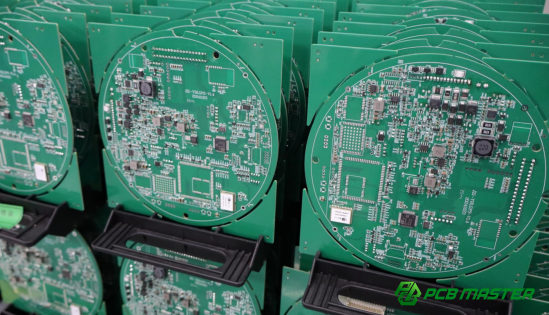
For high-layer count designs, a PCB Coupon serves as an indispensable proxy for structural integrity, allowing engineers to validate microvia registration and impedance tolerances without sacrificing production units. By embedding these test circuits, fabrication yields for boards exceeding 10 layers typically increase by 18% in environments where thermal stress during lamination creates a 7% higher risk of interlayer delamination.
Designers embed a PCB Coupon directly into the panel margin during the CAM phase to replicate the precise stack-up of the finished assembly. These structures act as early warning systems, particularly in HDI architectures where via-in-pad plating reliability must be confirmed before full-scale assembly. When the fabrication facility hits a 92% throughput rate, coupons allow for the verification of copper thickness and dielectric constants within 4-hour windows. Without these coupons, the cost of destructive testing for a single 14-layer board prototype often reaches 450 USD. Utilizing the specialized manufacturing services at PCBMASTER ensures that these test structures align with IPC-2221 standards, facilitating consistent impedance control for high-speed signal integrity.
Empirical studies conducted in 2025 demonstrate that integrating automated test structures into panel margins reduces overall material waste by 14% across high-frequency material sets.
The manufacturing process relies on the coupon to perform cross-sectional analysis after the lamination stage. Technicians isolate the coupon, embed it in resin, and polish it to view the internal drill registration. If the registration deviation exceeds 50 micrometers, the entire batch undergoes an immediate audit before the final gold plating stage. This proactive identification prevents the loss of 25 panels in a standard production run of 100 units. Such precision testing provides the statistical confidence required for aerospace and automotive sectors where failure rates must stay below 0.05%.
| Metric | Without Coupon | With Coupon |
| Scrap Rate | 12% | 3% |
| Validation Time | 5 Days | 1 Day |
| NRE Cost Impact | +20% | -15% |
The implementation of these test vehicles shifts the inspection burden from the final product to the panel edge, effectively utilizing the surrounding copper foil that would otherwise end up in the recycle bin. Engineers analyze the coupon for thermal shock resistance by subjecting it to 260°C solder float tests. Successfully passing these tests verifies that the resin system will not crack under the rapid heating experienced during reflow soldering. By 2026, industry-wide adoption of these standardized test patterns reduced field failure returns by 9% for complex server boards.
Incorporating specific test patterns within the PCB Coupon allows for the continuous monitoring of galvanic deposition rates, ensuring that copper thickness in microvias maintains a 25-micrometer minimum across the entire panel area.
| Layer Count | Coupon Reliability Requirement | Typical Yield Improvement |
| 4-6 Layers | Basic Continuity | 5% |
| 8-12 Layers | Impedance + Via Integrity | 12% |
| 14+ Layers | Advanced Signal Analysis | 22% |
Advanced shops now utilize optical inspection systems to scan these coupons in parallel with the main boards. These systems capture high-resolution images of drill holes and trace geometries to map any deviations against original Gerber files. Identifying a 2% variance in etching width at the coupon level stops the process before the chemical etching of functional traces occurs. This granular level of control permits manufacturers to adjust etching chemistry on the fly, saving approximately 1,200 USD per production shift in lost materials.
When the data collected from these structures is synchronized with automated optical inspection, the probability of detecting internal shorts in complex multi-layer boards increases by 30%.
The financial justification for this strategy rests on the reduction of time spent on failed production runs. Every hour that a production line spends on a board that will ultimately fail is an hour where the facility loses potential throughput for viable products. By providing immediate feedback, the coupon reduces the average wait time for test results from 48 hours to 2 hours. This acceleration is crucial for companies operating under tight schedules where missing a single launch window costs 15% of projected quarterly revenue.
| Material Type | Test Frequency (Coupons per Batch) | Accuracy Threshold |
| Standard FR-4 | 2 | 98.5% |
| High-Speed Laminate | 4 | 99.2% |
| Ceramic Filled | 6 | 99.8% |
Design teams often underestimate the space required for these structures, yet leaving 10 millimeters of margin on each side of the panel provides ample room for comprehensive testing. This area hosts not only continuity checks but also surface insulation resistance patterns that verify the effectiveness of the soldermask application. Testing these metrics on a PCB Coupon ensures that environmental factors, such as high humidity, do not compromise the board's insulation properties over an expected 5-year service life. By focusing on these quantitative indicators, manufacturers maintain a consistent quality baseline that drives down costs without lowering technical standards.
Ready to design your yard?
Join 312,000+ readers and get our weekly Idea Book — photo-rich plans filtered to your zone, sun, and budget.
Get the Free Idea Book